by Erik Tweedt | Jan 20, 2022 | Uncategorized
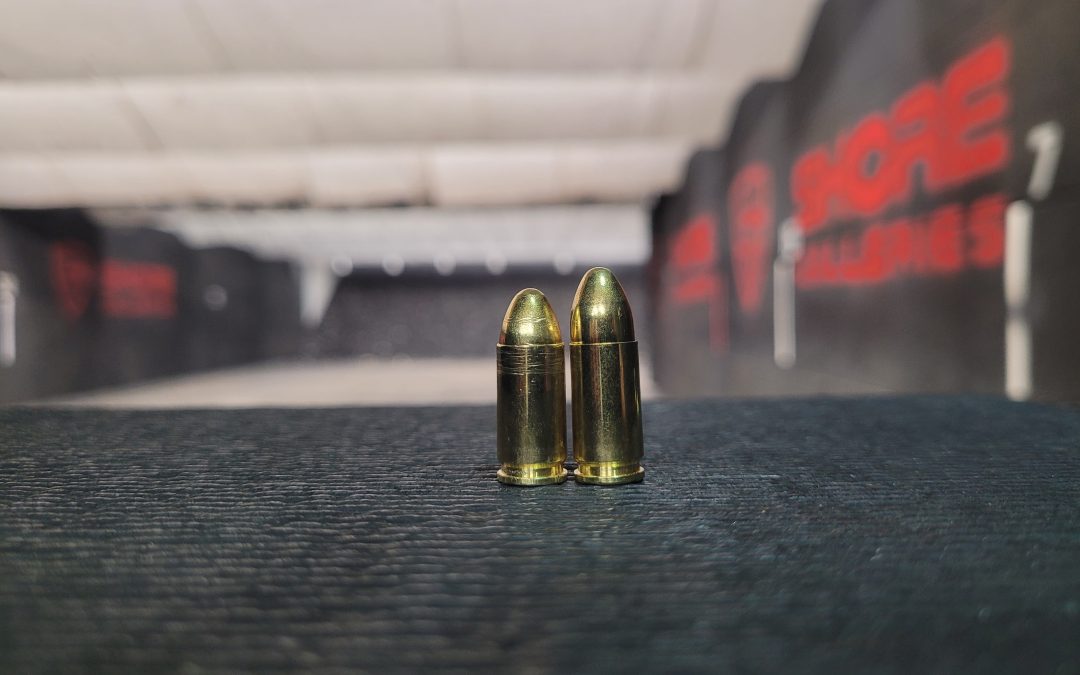
If you carry a gun, at some point, you will have to unload and load your gun administratively. You will hear a couple differing opinions on re-chambering the round you clear from your gun and how many times you can do it. There are those that give no thought to this and never rotate that round out, repeatedly chambering that round multiple times. Then there are others that never chamber a round more than once or will swap it out after 4 times.
The problem is that there is no solid info on best practices regarding how many times you can rechamber a round, it’s always just been conjecture. I set out to test these practices and get some solid data with the understanding that this is not a laboratory environment.
What are some of the issues we have been told we could encounter? Change in overall length of the bullet, be it shortening or lengthening and dislodging the primer compound. Both can be problematic on their face, but what actually happens? It could be that we have an over pressured round, a round that won’t feed or a bullet that doesn’t go bang. We are going to find out.
This is going to be an ongoing experiment with multiple brands of ammo, hollow point and ball (FMJ). My first test was done with S&B 115gr fmj. This test was done with a gen 4 Glock 19. My process was obtaining an initial OAL (Overall Length) measurement, chamber the round repeatedly and measure it each time. Periodically, I would shoot these rounds to check the primer and over pressure. I used both slingshot/ power stoke on the slide or the slide stop to chamber the round. I did not perform this test until failure. Failure being defined as the gun blowing up in my hand or the bullet not firing. I stopped at 50 cycles because I felt I reached max reduction in OAL and was satisfied with the effects on the primer. 50 cycles also kept it at a nice number and represents, essentially, chambering the gun 1x per week for 1 year.
What I found was it doesn’t really matter. I never had a failure. I started out with an OAL of 0.75 on the calipers and stopped at 0.65. I saw a consistent pattern shortening every couple cycles. I stopped at 0.65 because after 10 cycles I no longer saw shortening of the OAL. There was a noticeable increase in felt recoil towards the end and I never had a primer failure. The bullet always went bang. Now while I never had a failure, do I recommend using a round that has been chambered repeatably…. no. I will still be maintaining my normal practice of marking my round each time they come out of or go into the gun. When the bullet has 4 sharpie marks on the head it gets cycled out into my training bag. This practice serves as cheap insurance to ensure my gun goes bang when I need it to. If you have to use your gun Murphy has already shown up and once he is there, he likes to hang out. If it can go wrong, it will go wrong. Below you will see my measurements for the 50 cycles. On the graph below when you see a new beginning overall length listed it is a new bullet that started over at 1 which was cycled to the corresponding number.
|
beginning oal |
oal |
primer worked |
|
|
| 1 |
0.75 |
|
|
|
|
|
| 2 |
|
|
|
|
|
|
| 3 |
|
0.75 |
y |
|
|
|
| 4 |
0.75 |
0.75 |
y |
|
|
|
| 5 |
0.75 |
0.75 |
y |
|
|
|
| 6 |
0.75 |
0.75 |
y |
|
|
|
| 7 |
0.75 |
0.75 |
y |
|
|
|
| 8 |
0.75 |
0.74 |
y |
|
|
|
| 9 |
0.75 |
0.73 |
y |
|
|
|
| 10 |
0.75 |
0.73 |
y |
|
|
|
| 11 |
0.75 |
0.74 |
y |
|
|
|
| 12 |
0.75 |
0.73 |
y |
|
|
|
| 13 |
0.75 |
0.73 |
|
|
|
|
| 14 |
|
0.73 |
|
|
|
|
| 15 |
|
0.73 |
|
|
|
|
| 16 |
|
0.73 |
|
|
|
|
| 17 |
|
0.72 |
|
|
|
|
| 18 |
|
0.71 |
y |
|
|
|
| 19 |
0.75 |
0.71 |
y |
|
|
|
| 20 |
0.75 |
0.72 |
|
|
|
|
| 21 |
|
0.72 |
|
|
|
|
| 22 |
|
0.71 |
|
|
|
|
| 23 |
|
0.71 |
|
|
|
|
| 24 |
|
0.7 |
|
|
|
|
| 25 |
|
0.7 |
|
|
|
|
| 26 |
|
0.7 |
|
|
|
|
| 27 |
|
0.69 |
|
|
|
|
| 28 |
|
0.68 |
|
|
|
|
| 29 |
|
0.68 |
y |
|
|
|
| 30 |
0.75 |
0.68 |
|
slide stop |
|
|
| 31 |
|
0.68 |
|
|
|
|
| 32 |
|
0.68 |
|
|
|
|
| 33 |
|
0.68 |
|
|
|
|
| 34 |
|
0.67 |
y |
slide stop |
increase recoil |
| 35 |
0.75 |
0.65 |
y |
slingshot |
increase recoil |
| 36 |
0.75 |
0.68 |
|
|
|
|
| 37 |
|
0.68 |
|
|
|
|
| 38 |
|
0.67 |
|
|
|
|
| 39 |
|
0.66 |
y |
slingshot |
increase recoil |
| 40 |
0.75 |
0.65 |
|
slide stop |
|
|
| 41 |
|
0.65 |
|
|
|
|
| 42 |
|
0.65 |
|
|
|
|
| 43 |
|
0.65 |
|
|
|
|
| 44 |
|
0.65 |
|
|
|
|
| 45 |
|
0.65 |
|
|
|
|
| 46 |
|
0.65 |
|
|
|
|
| 47 |
|
0.65 |
|
|
|
|
| 48 |
|
0.65 |
|
|
|
|
| 49 |
|
0.65 |
|
|
|
|
| 50 |
|
0.65 |
y |
slide stop |
increase recoil |
by etweedt99 | Dec 9, 2019 | Uncategorized
AWIB & Red dot Pistol- The Path To Performance
Modern Samurai Project- Scott Jedlinski
November 22nd, 23rd, 24th 2019
Written by Erik Tweedt- Owner, Archetype of the Gun
Equipment Details:
Handgun- Sig Sauer P365XL, Trijicon RMR06 type 2
CZ P07 with Cajun Gun Works internals, Trijicon RMR06 Type 1, DA/SA
My goal was to take the class entirely with the Sig p365. Though halfway through day 1, Scott asked me to switch to my larger gun so I could get more from the course. I was having difficulty developing a consistent presentation with the small gun and it was holding me back. The gun is very accurate and easy to shoot. The RMR just makes it even better. I need more dryfire to shore up the presentation, mainly holster work.
Weapon light- Surefire x300A
Handheld light- Surefire Tactician
Holster- Bawidamann Gotham w/ Dark Star gear wedge and RCS claw( CZ P07)- Phlster flex with 3 Discreet Carry Concept mod 2.1 clips holding the gun, spare mag and flashlight
Dark Star Gear Hitchhiker, DSG wedge and Dark wing(Sig P365)
Mag carrier- Dark Star Gear Koala, neo mag holder left front pocket
Belt- Graith Specialist (no longer in production)
Magazines- 6 mags for each gun, standard and factory extended.
Med Gear- Soft-T wide, Dark Angel Pocket kit, Mini- Trauma shears, Hyfin entry/exit chest seals, 2 pairs nitrile gloves, carried in Ryker Ankle rig, Dark Angel- Dark kit carried SOB.
Ammo- Federal American Eagle 147gr FP, 1200rds (ish)- POA/POI is almost identical my carry ammo, Federal HST 147gr
The entire course was shot from concealment.
Prior Experience: 38yo, medically retired Chicago Fire Dept, Paramedic (19yrs), and owner of Archetype of the Gun. I have had 3 rotator cuff tears, 2 Labrum tears and bicep tendon relocated to my humerus from my shoulder. This leaves me with stability issues in my left shoulder, significant weight restrictions, nerve damage, severe muscle contraction and I lose sensation in my left hand. I take around 200hrs of classes annually; not including teaching and practice. I shoot 10k rounds each year minimum. I teach TEMS, TECC, Critical Care Paramedics, UTM Instructor, NRA Instructor, Rangemaster Instructor, Handgun Combative LLC Instructor. Full Bio available on my website, www.archetypeofthegun.com My normal carry is a CZ P07(not a hipster), 9mm with the holster as above,1 spare mag and flashlight on a Phslter Flex. Ryker med kit rides on my right ankle. I do not compete because I don’t have the time, balancing family, training and the business. I know I should, it’s just not a high priority for me now.
This was my second attempt at taking this course. I had to leave after the first day, last year, due to family emergency. All my training to date and been strictly self- defense oriented. I have never considered myself an amazing shooter, though if I am to be honest; I outshoot 90% of gun owners with ease. The remaining 10% I consider my peers and mentors (mostly instructors and competitive shooters) that challenge me to become better.
This is the first class I have taken that truly pushes the speed aspect to the raged edge. This is also the first class I have taken where I have failed to meet the class standards. I have always surpassed or met the goals of the class, but they have focused more heavily on reliably completing the task with an emphasis on accuracy. I have always been consistent in my performance and tend to keep my cool during testing, even if I’m not the fastest.
For those that don’t want to read the next couple pages, take this class…full stop! You will get more than your moneys worth. Scott successfully translates competition skills to practical, defensive skills. He will make you faster and more efficient, all while learning your limits. In the end I have more confidence in my skills, from learning to trust the technique and dot. I never thought I would be performing a 1.7 A-zone hit, from concealment at 20yds, 1.11 A-zone from 7yd, or a Bill drill in 2.20
Each day the course topics were covered in depth as expected. Daily description was taken directly from the Modern Samurai Project course description.
“DAY 1: Although it has been around for a long time, Appendix Carry has seen a resurgence in popularity in the last 5 or so years. While many people realize that it is an ergonomically more efficient form of concealed carry, many misconceptions still exist limiting its true potential.
After years of study with many great teachers culminating in the #15 FAST coin, I believe I have developed a system to accelerate the performance of nearly anyone who has chosen this method of carry.
Topics covered:
Why AIWB is more efficient than other forms of carry
Holster Concerns
Holster customization
Clothing considerations
Learning the draw from beginning to end (garment clear, firing grip, marrying the hands, presentation)
Drills designed to increase performance or understanding for self-diagnosis.”
This section focused heavily on body mechanics and I felt well versed already. Since I knew my technique worked well for me with my issues, I took this time to play with other suggestions, trying to eek out some more performance. Something that Scott, Donovan, and I picked up was the stability issue in my shoulder and how is affected my recoil management; particularly when I attempted to increase my speed. While some of Scotts techniques provided instant improvement for others, some of them slowed me down and decreased my recoil control. Not to say they wont eventually work for me, I just need more time to give them a fair shake and incorporate them.
Time was well managed and divided between grip, stance, presentation, bind and stationary foot work. Scott used his background in martial arts to demonstrate proper body mechanics and balance. All of it tied in to being efficient and the economy of motion. Not fighting your body and understanding how it works will make a huge improvement in your abilities. The least amount of energy, effort and time expended is your goal and Scott really hammered this home. I am glad to see other teachers presenting this material.
“Day 2: Red Dots on pistols are becoming more popular as options for carry weapons. Part of mastery is training – here it is!
Topics Covered
• Zeroing your red dot. 10 yard zero. 25 yard confirmation. Ammo selection.
• Draw and how to stop fishing for the dot. Why back up irons are necessary?
• Only use the necessary amount of information required to make an acceptably accurate shot at the speed and distance required.
• Red dots up close. 5 yards and in.
• Red dots at distance
• Speed: Efficiency of draw and presentation. Concealed and Open setups. Speed is the economy of motion. The Langdon presentation method. Speed is not useless frenetic movement. Micro Drill training method.
• Dot tracking: Grip, stance, dot movement, predictability. Stop over confirming the dot!
• Modes of Practice: Speed mode. Accuracy Mode. Match/For Realz Mode.
• How to get better on your own. Dry fire for skill building. Live fire for confirmation.
• Why you should compete.
• Mini match to test skills. “
Here we focused on the dot. Topics previously listed we covered in depth, and plenty of time was given for Q and A, working with individuals gear. We spent a good amount of time shooting to ensure that everyone had a solid grasp of the material before we moved on. Some key take-aways from day 2 where trusting the technique, follow the bouncing ball and don’t work against the gun. Knowing how to use your dot, in any given circumstance and what it will do goes beyond just knowing how to hit what you’re aiming at.
If you can use that info, you can run your gun faster and predict when to break a shot and where your shots will land. Don’t misunderstand me, my view is purely from a defensive stand point and I fully mean that I am placing accurate aimed fire… but just like knowing that I need to hold 3 inches high at 40yds, I know where my bullet will land based off of the guns movement and my input on the firearm.
“Day 3: The final day will focus on learning how to practice/train for and possibly reaching my Black Belt Patch standards:
3 x 2 drill: 2 seconds
7 yards 1 shot: 1 second
Bill Drill: 2 seconds
25 yard 1 shot: 1.5 seconds
A detailed explanation of the standards is here:
www.modernsamuraiproject.com/black-belt-patch-standards.html”
Today we really pushed ourselves further. Picking our favorite methods from the past 2 days and working the myelination process. Picking up even more speed and practicing the course standards. Prior to the final shooting of the standards we got to take a couple runs through a single stage of a mock competition. Long story short…do what Scott tells you to do if you want to go fast and be A- zone accurate.
Throttling is important to maintaining accuracy given your circumstances and distance. If you didn’t get that by this point in the class, you weren’t paying attention. I use the same technique regularly, 80/20, 90/10 etc. If you don’t know what that means…. well take the class.
Conclusion: While I am more than satisfied with the experience I had and the improvements I made. I don’t want people to be obsessed with the speed and lighting fast splits… neither does Scott. Remember, don’t shoot faster than you can process the info that is coming in. A big take away is freeing up band width, or processing power. This is something that I have always preached but now I see another aspect to it. It can make me significantly faster by anchoring the skills, trusting the technique, and knowing the dot will be there because I have done my part right. The less we focus on the skills, the more we can focus on the event and take in more information; processing it fast allows us to use our skills more effectively.
Test your gear, my front sight fell off on day 2, a Glock front sight came loose. 2 dots went down, a Leupold DPP had electronic issues and a RMR with 40k rounds on it had the display window fall out.
Scott eliminated a bad habit I had of using my front sight as a rudder…following it during my presentation to find my dot, slowed me down. Once again, I was consistent, I was accurate to a fault….but I was not fast. Trusting the method and finding the dot without my front sight was a huge improvement. I new it would be, based on recommendations from people like Scott. I just never tried hard enough and pushed my limits with that method. Now I know better.
by etweedt99 | Sep 11, 2019 | Uncategorized
Big thanks to Dakota Schafer for coming to class and writing this up.
My AAR of the “So You’ve Been Shot” class from Archetype of the Gun
Class: So You’ve Been Shot
Company: Archetype of the Gun
Instructor: Erik Tweedt
Location: The Compound, Crete IL
Date: August 3-4 2019
My Background: For full transparency, Erik invited me as a guest at this class, and I only paid for my travel expenses, ammo, and range fees. I did not pay the tuition for the class. I am just a civilian with 5 years of experience carrying a concealed pistol daily (with few specific exceptions). Over the past 5 years I have attended at least two classes per year, which include mostly shooting classes such as Critical Handgun employment from Sentinel Concepts, Tactical Pistol from Tap-Rack Tactical, and No Fail Pistol from Presscheck Consulting to name a few. I had also previously taken two stop the bleed classes, which was the extent of my TCCC type coursework.
My Equipment: My “loadout” for this class was my Sig P320 VTAC with an RMO6, Tenicor Velo AIWB holster, RCS Copia dual mag holder, Blue Alpha Gear Hybrid EDC belt, 1,3OO rounds of Fiocchi 115 9mm FMJ (957 fired), eye and electronic ear pro, an on-body SOFTW on a Phlster Flatpack, a Dark Angel D.A.R.K. Lite IFAK, Alta knee pads, and other things that make two long days on the range more enjoyable. For those who don’t know that that means, were talking a camp chair, cooler with a mixture of water and sports drinks, sunscreen, etc. Erik provided all training medical equipment.
Class Demographics: Including me, there were 6 students in this class for both days, and it was primarily made up of armed civilians, with the exception of one LEO. One of the other students was a career long paramedic who served in the same organization as Erik.
The Range: The Compound is a private range that primarily caters to LEO training, but also lets a few select instructors teach open enrolment courses there as well. It is gated, and is very specific about the time frame you are allowed to be there. That said, it was my second time there, and I did not feel inconvenienced or limited at any time. The bay we were in was asphalt, which made for easy cleanup. Erik had canopies set up to get us out of the sun, water, D-lead wipes, electrolyte powders, sunscreen, etc. He also had targets, adhesive spray, markers, and whatever else we needed to make target repair efficient and easy.
TD1 Morning: The morning started at 8 AM with an introduction from Erik, as well as a safety discussion and a briefing on the emergency medical plan. At that point we rolled right into Erik’s presentation on TECC. He went over all of the requisite concepts of TECC, and had plenty of personal experience from his time as a Chicagoland EMT to throw in to the discussion. There was also some hands-on time with TQ’s and wound packing, and also got to discuss EDC considerations for medical gear. This segment ended at 12 PM and was followed by a “working lunch” in which we ate and hydrated while gearing up for the shooting portion of the class.
TD1 Afternoon: There was only one relay both days, which allowed everyone to get as many reps as they wanted. Most drills were shot with a magazine of ammo instead of a specific round count. The range portion of TD1 started with a basic confirmation of skills segment where students were evaluated on their skill level, specifically their overall gun handling. That was the main segment where we were shooting freestyle, and then we quickly moved on to refining our one handed shooting skills, which should come as no surprise, as this class is primarily based around the injured shooter. One interesting aspect of that block was that we did some mirror image shooting (shooting with a freestyle grip, but with our non-dominant hand). On it’s face I was skeptical as to why we were doing it, but I then found out that it was to get us in the mindset that we can use our injured hand to help stabilize the gun if we have enough mobility with it. We may not go all the way into a standard thumbs forward grip, but we can absolutely jam some meat into the side of the grip. Throughout this time, Erik would come around to all of us and offer tips and suggestions to improve our shooting fundamentals as he saw deficiencies arise. Towards the end of the day we started to work on movement, which also included a block on muzzle management. Some dry runs were done to make sure everyone could move safely with their guns. The live runs wrapped up TD1, and we ended the day with a quick clean up on the range.
TD2: TD2 started at 8 AM again. Having covered movement during TD1, we jumped right into positional shooting. This was where knee pads came in handy, especially being an asphalt range. We then worked on use of cover with some VTAC barricades, integrated getting in and out of various positions while behind cover. From there we worked on malfunctions and reloads with only one hand, and got to shoot with some stage blood covering our hands (and red dots for those of us running them). After that we moved into our final drill/test. Without going into too much detail, we set up a drill with multiple targets, no shoots, turners, multiple shooting positions behind barricades, malfunctions, reloads, self-application of tourniquets, and quite a bit of ambiguity in terms of how threats were engaged and when events would happen. We ran through this drill twice, and it allowed us to see where we were at in our skills when problems started to be stacked on top of us. Problems arose, and we were expected to solve them. For instance, I had a CAT (uncertain of generation or even authenticity. It was a trainer anyway.) that when applied was bending the catch open and letting the windlass loose. I had to fight pretty hard to get it to stay long enough to get the retention strap over the catch to hold it all together. Ideal? No. Useful to go through first hand? Yes. I haven’t seen that from current CAT’s, and absolutely don’t believe it to be an issue. That said, stuff fails, and we need to be ready to “stay in the fight” as we work through problems that come up. At the end of the day we cleaned up the range, which was made easy by the asphalt range, and debriefed what we had learned. Erik offered his time and attention any time we needed it in the future.
My Overall Experience: The class was absolutely worth the price of admission (had I paid it). The mixture of medical skills, shooting skills, and the culmination of them both at the end was extremely valuable, and I highly recommend anybody carrying a gun for personal protection take this class. Personally I appreciated the experience Erik brought to the table, and how accommodating he was for us students. We wanted for nothing on that range.
If there is one thing I would add, it would be to add a brief overview of the TECC concepts on TD2 and/or toss in some application throughout the range time. Maybe make students have a training TQ on body and call out some injured limbs to TQ randomly during class.
In this community, it seems to be more difficult to get people fired up for medical classes compared to shooting classes, even though the odds of you needing medical skills throughout your life are much higher. A class like this merges the two and might be enough to pull some of the fence sitters over on the medical side of things while still getting to send some purposeful lead down range.
Check out Primary & Secondary, ModCast 203 for more commentary on the class
by etweedt99 | Sep 2, 2019 | Uncategorized
So, I am about 9 months into the red dot life and I have been very happy. There is a learning curve, but I feel it is worth it. I have been teaching and taking classes with this set up and feel it has performed very well. “If you ain’t cheating, you ain’t trying hard enough” is how I look at fighting with a gun. I have talked previously about stacking the odds in your favor and having a red dot on your gun does just that. I am not saying that you can’t win a fight or run your gun well without one, but they do offer a distinct advantage.
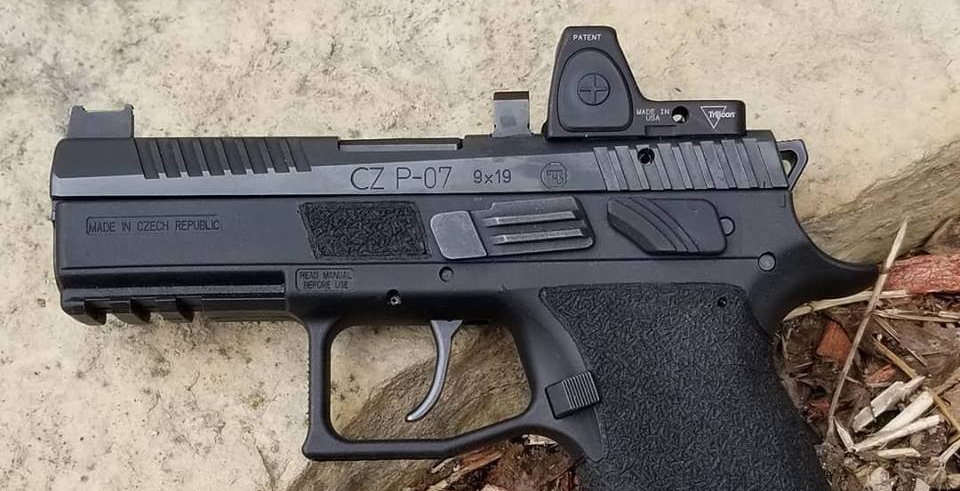
My primary carry gun has been the CZ P07 with a Trijicon RMR 06 on it and my back up and training gun is a P09 set up the same way. I have 2 guns with back up sights that are forward of the optic and 2 guns that are behind the optic. Most people won’t have a preference until they shoot for a while, but I prefer to have the backup sights forward of my optic. I prefer the obstruction in front of my glass, and it gives a modicum of protection to the optic during 1 handed manipulation. Since I prefer to have back up iron sights on my gun, I’m not really loosing anything in that regard.
The obvious advantage is better accuracy and speed at distance. The saying goes “Distance favors the trained shooter” and that goes double for having a red dot. At a distance as close as 10 yards I am getting faster more accurate shot placement with an optic. I am no slouch with iron sights, but this is where I start to see a performance increase. When you increase the distance from 12yds out to 25yds it just doesn’t compare. Now, part of this is the fact that most people’s iron sights start to obscure the target at 12yds, especially with a 3 dot or factory sights. This isn’t as much of a problem for those with aftermarket sights like Dawson Precision. Though, lining up a single focal plane is much more efficient than lining up 2 focal planes on a target. With a consistent presentation of the gun, most people can get by this, but you can’t argue the fact that just putting the dot on what you want to hit is much more efficient. No longer do I need to approximate where I am aiming at greater distances, because the target just isn’t obscured.
Shooting up close is just as easy. With a consistent presentation, the gun is going to the same place every time, the dot will appear just as easily and the focal plane benefits from above come into play here again. Yes, at first it may appear as though you are slower up close, but I found that with practice that goes away. I am not usually a proponent of point shooting anywhere past 3yds, and this isn’t truly point shooting, it more like a flash sight picture. At 10yds and in, I can line up the cat ears that make up the top of the RMR on the shoulders of an IPSC or silhouette target and make shots in the high thoracic cavity with ease. Where a dot can slow you down up close is if you lose your dot. For me this happens when I have a sloppy presentation or poor grip. I will sometimes find myself hunting or fishing for the dot, and this slows me down. You can mitigate this problem 2 ways. First, obviously, is have a solid and repeatable draw stroke, not removing the gun from the holster until you have a good grip on the gun. Steve Fisher says, “You only get what you get, when you get it”. In this context that means not pulling your gun from the holster until you know that your grip is right. Put another way, Dave Spaulding is fond of saying “Don’t be a grip dick and accept a shit grip”….or something to that effect. The second way to mitigate this is accept that the dot isn’t where it is supposed to be and switch to iron sights. This accomplishes 2 things. It gives you a sight picture so you can get accurate hits on target for you first shot, but it also puts the gun in the correct position and your dot will reappear in the window for your follow up shots. To paraphrase Tom Givens, it doesn’t matter why the bad thing is happening to you, accept it, move on and fix it. So, don’t waste your time trying to find the dot when you have other methods available to you to make your hits.
Red dot sights also give us options. Specifically, we have two methods of aiming. I don’t mind having a backup. Any mechanical device will fail, and I have had both red dot optics and iron sight fail me. Batteries die, zeros can shift, glass can break or fog up. I have also had iron sights walk out or just shear off. Again, I like to stack odds in my favor. This wasn’t a primary reason for deciding to put a rds on my carry gun, but it doesn’t hurt. The optic also gives me a larger surface area for manipulating the slide, with either both hands or single handed. Plus, you can use the optic to run your slide off or objects. Now I don’t recommend using the optic as a primary method of running my slide, but if I am under pressure and miss my mark or grip the rds is there. If you have a quality optic like Trijicon RMR you aren’t likely to hurt it, but its possible. If you are curious as to how your optic performs check Aaron Cowan’s’ white paper on red dot sight. It is an evolving document on all of the popular options.
Dot size is something that each shooter has an opinion on. Currently all of my dots are on the smaller side, 3.25 moa and down. My future rds optics will probably be 1 moa. There are those out there that say a bigger dot is better for fast acquisition and they aren’t necessarily wrong. It is a personal choice. For me though, a smaller dot has more benefits, particularly at distance. It covers less of the target allowing me to be more accurate. I haven’t had any problems acquiring the dot and if I want it to appear bigger, I just bump up the brightness.
RDS maintenance is something we need to discuss. As I said previously, all mechanical devices fail at some point. We can mitigate this though. First by purchasing a quality optic. The rest falls on our habits. Begin by mounting it correctly, with witness marks and properly torqued screws. Check your witness marks every time you use or clean the gun. Next you want to take care of your glass. I like to use Cat Crap. The anti-fogging agent keep the glass clear throughout the day and aids in cleaning. Make sure you apply it the right way and you shouldn’t have any problem, but remember, Murphy gets a vote. Batteries, if you buy the right ones, are relatively trouble free, I like Duracell. Change them annually or sooner based on your brightness settings. Pick a date that is easy to remember…January 1st, your birthday, Christmas etc. A tip I picked up from Matt Jacques, Victory First, is to use a sharpie to write the date on the battery. This is particularly helpful if you have multiple guns equipped with red dot sights. My carry gun battery gets swapped annually, regardless of use. But my training and rental guns get changed when they die.
So, who benefits from a red dot….almost everyone. New shooters, shooters with failing eye sight, and shooters who may be experiencing some eye fatigue from shooting for long periods of time. During my “So You’ve Been Shot” course we do a impaired vision drill, where I blur the dominant eye, by the end or the drill most shooters are surprised at how easy it is to transition with the dot. The red dot provides advantages to all these shooters. Primarily what the dot does is simplifies the aiming process. As I said before a single focal plane is easier to use, no matter which of the above categories you fall into the red dot will help. Think about this, if you wear corrective lenses or glasses, will you have time to put them on in the middle of the night? What happens if they get knocked out or off in a fight? The dot can help with both and more. New shooters benefit because there is less to focus on when starting off. Which is easier, lining up the iron sights with equal height and equal light or just putting the dot on what you want to hit? The ability to stay target focused with a rds gun doesn’t hurt anyone. Especially when that is where we tend to focus under pressure.
So this is where I am at currently. This may change or it may not. I have only been shooting RDS guns for the past year or so and I am still learning. Will I come to a point where I stop trying new techniques… not likely. One of my personality traits is that when I get into something, I tend to go all out and become almost obsessive. That commitment is something my family and friends will attest to, be it good or bad. I hope you find this useful and is shortens your learning curve by passing on what I have experienced. Don’t forget to check out Steve Fisher, Aaron Cowan, Scott Jedlinksi, Chuck Pressburg and Matt Jacques for more info on rds guns.
by etweedt99 | Dec 17, 2018 | Uncategorized
I want to talk to you about how I lay out my training plan…teachers and courses I would like to attend. Hopefully, this will help you create your own. Let’s get something out of the way right off the bat. If your decision to take a class is based off a potential instructor’s social media presence… you are wrong. Your priorities are way out of whack and you need to seriously look deep within yourself and decided why you are doing this. If a deciding factor on a class is how cool it will look on Instagram, you would get more traffic by shooting yourself in the foot on a live feed.
There are a couple criteria to consider when choosing a teacher and what course to take. First off, how likely are you to use the skills you will learn? You must be honest with yourself. Likely, most people should start off with a medical course, not a shooting course. You are significantly more likely to use medical skills than use your firearm defensively. There is nothing wrong with taking a class for fun, just be honest with yourself as to why you are doing it. If your day to day life is in a large metropolitan area, a quality handgun course would serve you better than a precision rifle course. Choose your course based upon your needs, not some fantasy. If you are in the military or law enforcement this will change. This can be a chore for some, so you need to take some time and identify what real life needs the class will fill. Why does an accountant need to show up to a class on explosive breaching wearing $600 worth of camo and plate carrier?
Next, you should research the potential teacher. Yes, I said teacher, there is a difference between teacher and a trainer. Basically, teachers help you reach your potential by getting you to use critical thinking and problem solving through purpose-built instruction. Trainers follow rote guidelines, generally developed by someone else, following a checklist of skills needed for you to obtain a short term or immediate goal. We teach students and train animals. High order and growth driven vs. base level and task driven. In your research you should easily be able to find out if the potential person or school is using current or outdated curriculum. As well as the lineage of the cadre or teacher. Two good things to look for are, do they take classes as students themselves and does their coursework evolve with them. Lastly on researching your instructor, do they have the experience and knowledge base to be teaching what they are teaching. For example, should you really be taking a night vision course from someone whose only experience is with NRA basic marksmanship?
Now that I have covered the basics for making choices, lets break down the courses themselves. Medical courses that I consider the bare minimum are American Heart Association CPR and Stop the Bleed. For those wanting more info and a wider range of skills, taking a TECC course or getting your EMT- Basic license not only cover a larger array of topics, but also go into more depth. These medical skills are something that stay with you for the rest of your life and you can take them anywhere. Gun free zones be damned.
Handgun courses can be found in almost any local. Some are significantly better that others. While I feel that everyone should take a concealed course, you need to be careful who you go to. I have written about this in a previous blog. So, what should a class cover that is designed to teach you how to fight. First off, it should be run from a holster, first open, then concealed. After all this is how most of you will be carrying….and open carry is stupid, unless you are required to for work. The next component is accuracy. You can’t stop the fight if you can’t hit what you need to. In the beginning an 8-inch circle for the chest and 4- inch circle for the head are a good place to start. Eventually you need to bring those down to a vertical 4×6 box in the high center chest, and a horizontal 3×5 box in the head. Anything less is a miss, and a waste of precious time. Lastly it must cover use of force. In our hand we hold the ability to end a human life in a split second, this shouldn’t be taken lightly. Besides, did you really win the fight if you end up in jail? There are more components to a good handgun course. Movement, malfunctions, reloads, cover/ concealment/ barricades, tactics, etc… are all important. However, the most essential pieces should be can you get your gun out, can you hit what you need to hit to stop the threat, and doing that legally & morally so that you can go home to your family.
Where would a good training plan be without a component of physical health and abilities. Yes, you can defend yourself if you are unhealthy or out of shape. It is, however, easier and more beneficial in the long run if you are healthy and fit. Start by seeing your doctor regularly, losing weight, and eating healthy. After all, you want to be around to see your grand-kids, don’t you? If you have never been in a fight, let alone one for your life, being out of shape puts you at a serious disadvantage. You shouldn’t put off learning some basic fight-oriented skills until you are fit. Learning them will get you in shape faster. The ability to defend yourself with open hands while standing or on the ground is your goal. Putting yourself on and following a martial path is all encompassing, so don’t stop at one. Boxing, Brazilian Ju Jitsu, Greco Wrestling, Muay Thai or any combination of those would be a good place to start. Picking a gym or school for any of the above is exactly like choosing where to learn the gun. The list above may even be more troublesome, if you thought finding a gun school was bad…. just wait until you start looking into the martial arts. Make sure that the school or trainer you choose fulfills your goal, and preferably will help you in a fight.
At this point you’re probably thinking “How am I going to find time for this, let alone afford it?” It’s true, this can be time consuming and costly. I can’t even count the tens of thousands of dollars I have spent in this pursuit. Time wise I could probably have earned a master’s degree. Trying to do it all at once is to daunting a task. This pursuit is a lifestyle and should end up being spread out, continuously, throughout your life. The trick is finding balance. Just as in defensive gun encounter, we must find a balance of speed and accuracy, so to must we scale this. Family, work, training, just living and enjoying life must flow. It will be taxing at times; it is however, worth it. There will be times in your pursuit when various aspects of your plan will take precedence over others. Not only is this normal but is it a good thing. It shows growth and the ability to evolve. I mean that is what you are doing here. I’ve even gone as far as making a career out of it.
This lifestyle will cost you. It will cost money, weekends, evenings, and more. Though that cost will pay dividends when it is needed. The investment in yourself will provide countless moments of ease. The sacrifices you make will have to be supported by your family. This is easier when your partner has the same mindset and makes the same commitment; though it isn’t a necessity. They just need to be supportive. Being able to see the benefits of this lifestyle helps tremendously. So be sure to discuss these decisions and don’t try to force a significant other into this lifestyle.
Self sufficiency is what I am talking about. Not relying on others for your own well-being and your family’s. Dave Spaulding says, “You are your own first-responder.” This means choices must be made. Just as you decide to pull the trigger, you must decide what is truly an effective means of getting there. So, things like buying a used car, cooking more meals at home, gardening, canceling the lawn service or cable all afford you the financial means to and end. Your choices in gear and other necessities must be prioritized. Sure, we would all like a Nighthawk Custom or Knights Armament gun but, a police trade in Glock or Colt 6920 will still do the job. What’s that saying? Beware the man with one gun, that knows how to use it. A well-worn and well-known tool in the hands of person that is confident in its application is more impressive than any Gucci blaster could ever be. I’m not impressed by your kit, hell I don’t really care. All I care about is if it is reliable and can you show me that you know how to use it. Don’t waste your time and efforts just to acquire things that look cool. Be prudent in your choices…at least in the beginning. There will come a time when some of those splurges can be justified.
Finally, here are some instructors that will get you started in the right direction. There was a drastic change to my training plan a couple of years ago with the death of Pat Rogers. I realized that some of these teachers will be gone before too long, either from retirement or death. So, I made it a priority to train with as many of the old guard as possible. From there I will move onto the next generation.
Massad Ayoob- Massad Ayoob Group
Clint Smith- Thunder Ranch
Ken Hackithorn- Aztec Training
Tom Givens- Rangemaster
Dave Spaulding- Handgun Combative
Claude Werner- The Tactical Professor
Bill Rogers- Rogers Shooting School
John Farnam- Defensive Training International
All these instructors are highly regarded among their peers. There are many more and it would be a waste of time to try and list the all, especially when I know for a fact, I would leave out more than a few. Remember the previous criteria for choosing a course and mentor. I used the word “mentor” carefully. I haven’t attended a course yet where the instructor hasn’t made themselves available to me afterwards when I had a question or needed clarification on something from their course. In fact, I keep in regular contact with those that I have elevated to a mentor status. Even if you don’t have their cell phone number, many still have dedicated groups on social media strictly for their alumni.
Give your training plan some serious thought. Just like a training session, we need to plan for our success. Identify your needs vs. wants and regularly evaluate them. Taking all the above into account will save you time and money. As well as prepare you for winning a defensive encounter. Nothing we do is a guarantee, but we can stack the deck in our favor. Train hard, train smart and share what you have learned with others.
by etweedt99 | Dec 5, 2018 | Uncategorized
I had a student for a private lesson recently that had never touched a firearm and was pursuing a career in law enforcement. It took a little extra work to unlearn what social media gun schools had taught him, but we got past it. Once he was there, I was able to make some lasting impressions on him. Safety, gun handling, accuracy, and speed were greatly improved. But, when he lost focus a bad habit kept sneaking in…needless movement, and I ignored it. Why? With a gentle reminder it went away, I had taught him correctly, but he needed to reinforce it with practice. He had the essentials but hadn’t made them permanent yet, and he left happy and confident.
I hear people parrot the phrase slow is smooth and smooth is fast all the time, but they forget a key component to it, the economy of motion. We talk about stacking tolerances in your favor. Sloppy tolerances will function but not as efficiently. One needs only look at any high performing athlete to find my meaning. They only do what is required to complete their task. They are the embodiment of efficiency. Tom Givens says, “The only thing that runs out faster than ammo in a gun fight is time” so let’s not waste it. No, you don’t need to be a speed demon; just don’t waste time. In fact, sometimes you need to slow down.
Back to the athletes. Look at any of them, BJJ, wresting, shooting, running, driving, boxing. The masters have eliminated anything that does not directly help them accomplish their goal. Their goal is the same as ours, winning. Not just surviving. For us, wasteful movements are just as bad as wasted bullets. The only way to become efficient is through purposeful perfect practice. This makes our skills permanent, freeing up the brains ability to focus on other important tasks, like assessing the threat. Breaking our practice down into Micro drills (a term I heard from Scott Jedlinksi) allows us to fine tune what is needed and what is not. Micro drills are simply isolating a single component of a skill and working until you can’t get it wrong. Ideally using less and less effort as we eliminate the extra or waste.
I like buying new guns as much as the next person. My wife firmly believes my collection is obscene. However, you cannot buy skill. Sure, there are things you can buy to improve your abilities, but you must already have those abilities in order to achieve the real gains those purchases avail. Red dots, triggers, custom guns, etc.… bring something to the table but are generally not necessary. In addition, they are frequently a waste of money that would be better spent on training, ammo and practice. I have talked briefly about it previously and will make write a more in-depth piece on it in the future; dry-fire is free and there is a reason why all the high performing shooters in the world do it. You can do it almost any where and it works.
In the end shooters need to practice eliminating fruitless movement of the body and the gun. Only then will we have mastered a skill; and it is a continuous process. Our goal is getting the gun out, placing effective and accurate rounds on target to win the fight. These are the only things we can control so why wouldn’t you want to be as efficient as possible.
by etweedt99 | Nov 13, 2018 | Uncategorized
Red dot sights on pistols is nothing new. They’ve been on competition guns for a long time. Now that the mounting options and optics are more reliable and smaller, they are making strong inroads to law enforcement and self-defense. There are numerous reasons to switch to a red dot on a handgun, from both an individual and instructor’s stance. They are also quickly being adopted for duty use.
I wasn’t sure if it was for me. The cost alone of a quality set up for everyday use is enough to scare someone off. The gun, the optic, the aftermarket gunsmithing (it seldom stops with the optic cut). There are now many manufacturers producing optic ready guns, but they are not nearly as robust as a custom cut, but they will get you started. The Sig Sauer Rx line of handguns was where I chose to start out since they were the most cost-effective option.
My choice was a Sig p320Rx full size, $800ish out the door in the Chicagoland area. Plus, I had been wanting to try the 320 since it came out. After grabbing one and playing with it for a bit I started reading up on how to effectively use it. My primary sources were Sage Dynamics (Aaron Cowan) and Modern Samurai Project (Scott Jedlilnski). The internet was full of suggestions but these 2 made the most sense to me, and they’re highly regarded in the red dot game.
I took it out and played with it but never really put in any serious effort to learn it. I could make hits and quickly saw why people liked them. But that was it. I finally decided to give it my full attention when I hosted Chuck Pressburg of Press Check Consulting. I mean I couldn’t take a class from the creator of the Roland special on a gun with iron sights. I had missed a class with Scott Jedlinski earlier that year, and it bugged me. Chucks No Fail Pistol class sold me on red dots, and next thing I know I was a Jedi class next.
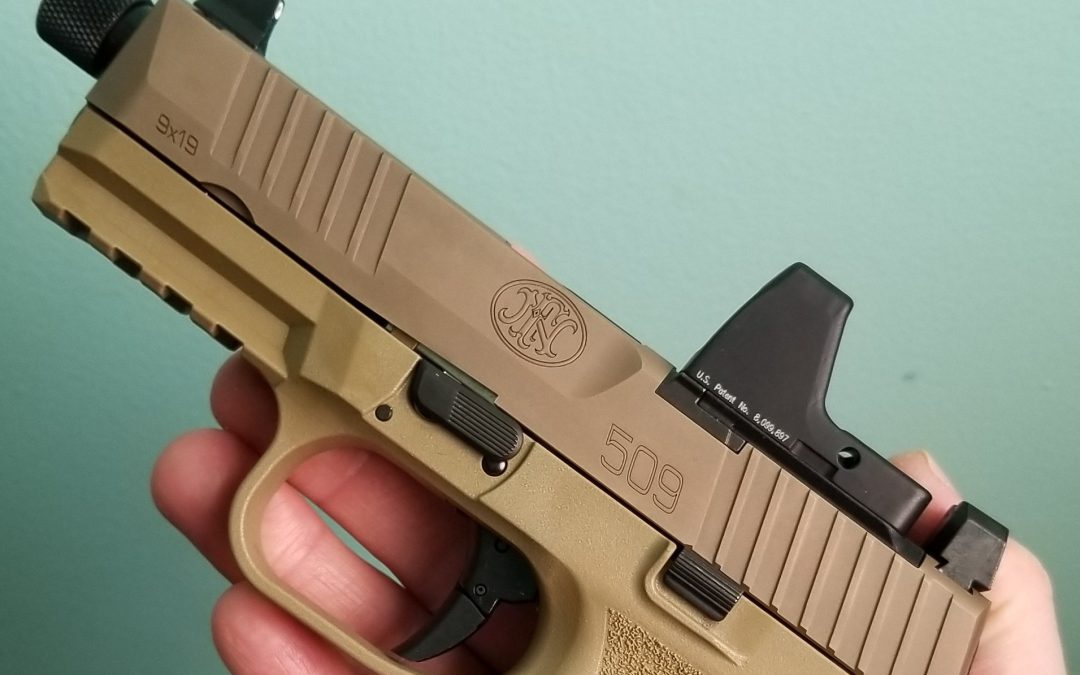
I struggled through Chucks class but made significant improvements. Jedi’s class was less of an effort and that’s when it really started to make sense (after 1 day). I had to miss the second day due to a family illness but, I can’t wait to get into the next one. After 3 days of instruction using a red dot, I decided to switch my carry set up to include a pistol equipped with a red dot sight. Next thing I know I was sending off my carry gun (CZ P07) off for some work. Now I am sitting with my 320, CZ, FN 509 all RDS equipped and another 2 in the making.
Red dot sights on guns are not for everyone, but they are here to stay and should be seriously considered. Its hard to deny the advantages that they give a shooter. There is also a significant advantage for new shooters and those with worsening vision.
by etweedt99 | Sep 20, 2018 | Uncategorized
No Fail Pistol- Chuck Pressburg
Presscheck Consulting
Sept 15th & 16th, 2018
Written by Erik Tweedt- Owner, Archetype of the Gun
Equipment Details:
Handgun- Sig Sauer P320 (factory upgraded trigger), full size, Romeo 1 RDS
Weapon light- Surefire x300A
Handheld light- Surefire Tactician
Holster- Bawidamann Gotham w/ RCS wedge and claw
Mag carrier- RCS Copia double, neo mag holder left front pocket
Belt- Ares Gear Aegis
Magazines- Factory, 3x17rd, 1x21rd
Med Gear- Soft-T wide, Dark Angel Pocket kit, Mini- Trauma shears, Hyfin entry/exit chest seals, 2 pairs nitrile gloves, carried in Ryker Ankle rig
Ammo- Fiocchi 115gr, shot approx. 900rds
The entire course was shot from concealment.
Prior Experience: 37yo, medically retired Chicago Fire Department, IL paramedic/lead instructor (18yrs), owner of Archetype of the Gun. Past training with Clint Smith, Tom Givens, Massad Ayoob, Andy Kemp, Bob Houzenga, Dave Spaulding, Varg Freeborn, Robert Militello, TEMS, TECC recognized educational partner, Critical Care Paramedic, UTM Instructor/professional training organization, NRA Instructor, Rangemaster Instructor. Rifle, shotgun, handgun and executive protections classes from the above. My normal carry is a Sig Sauer p229, 9mm with the holster as above,1 spare mag in a neo mag holder left front pocket. Ryker med kit on right ankle
Range: Article II range in Lombard, IL. We secured private range use and privileges. 8 lanes wide, 25yds from inside the stalls. The staff let us stay longer than reserved on the last day, because it was slow and my prior relationship. Lots of looky loos at the windows of the range…Chuck gathers a crowd.
Class Demographics: 11 shooters, 2 relays comprised of armed citizens, Leo/Mil (active and retired), Leo/ Civilian instructors. All attendees had a decent amount of professional training; ranging from 1-2 classes when they can, all the way up to I train for a living. There were also a few students from some big-name industry retailers.
Preparation: 200-300rds through gun for function check and rough zero, cleaned and lubed gun. Mags were loaded 3mags of 10 and the last to capacity. There was significantly more work as class host, not because Chuck was needy…I just wanted to make sure everything went smoothly.
To start off, I showed up as a bad student. I had a newish gun…function checked and played with for basic familiarity and a rough 10yd zero. I did not put any real time into learning how to use a pistol mounted red dot. I did not zero my ammo. Function check and rough zero was done with 124gr…I brought 115gr. I did not inform Chuck of this and basically taught myself how to use it on the fly, trying to remember what I had read prior to purchasing the gun. I purchased with the intent to experiment with RDS pistols prior to spending a significant amount of money having one built. I could blame this on any number of real-world reasons, but I should know better. This was a significant failure on my part as a student, and I preach to others that this should not be done. Students need to show up to class with working and known equipment as to spend their time focusing on new lessons and not a new toy. I refused to let this slow the class down, there where better uses of his time and this wasn’t a “Intro to rds” course . It was evident on day one that I was not shooting to my ability. Chuck saw this and would whisper gently into my ear…YOU FUCKED THAT UP!!! Seriously though, he reminded me of things I knew, but was not doing. By day two this had resolved…It was obvious to other students and Chuck.
Course overview: Chuck’s No Fail Pistol course is designed around making a high risk/ high reward, low percentage shot….all the marbles, you miss and innocent people die, loved ones. Think hostage rescue or shit head with a bomb. This class, while not super physical/run and gun, is very taxing; both mentally and physically. This class pushes you to your limits and beyond. This class is for intermediate and advanced shooters, you should show up knowing how to shoot and have you range/class etiquette locked down.
I will not talk much about specific drills or testing. You will have to take his course for that.
TD 1: Class started on time with student and instructor introductions, followed by a safety briefing/medical plan and a short, concise lecture from Chuck. Expectations were well thought out and explained. The rest of the time was spent shooting with teaching points brought up when/where required. The entire class was shot on IPSC and NRA B8 target centers. We started with warm ups at 25yd on B8’s and used them through the rest of the day. Chuck follows the crawl, walk, run philosophy, assessing our abilities and adding new skills/ problems as we progressed. A tried and true teaching method of chuncking learning/ stacking tolerances. Today was focused solely on accuracy and the high standard expected from us was clear. By the end of the day fatigue was setting in and was evident in our groups. We broke for the day and Chuck gave us some parting thoughts.
TD 2: One handed drills, multiple targets, shooting on the move, threat assessment and shot placement/calling while shooting. Today built on the same skills as yesterday, now with more speed and no fail/hostage targets. We were encouraged to drive it until the wheels fell off and gain control again. Finding our limits and then performance on demand. Chuck reiterates that he can only teach us to what to practice and doesn’t expect large improvements from us. Though, he is pleased when we push through and achieve new levels. Today the range was kinds enough to let us stay late because it was slow, Chuck took advantage of that without missing a beat. He filled in with extra course work and made sure we weren’t to gassed to perform our final test. We can’t ensure learning occurred without metrics…that means testing. Testing was done on B8 target centers, individually and timed. I feel there was significant improvement class wide. At the end there wasn’t a disappointed face in the group. We were tired and sore, but everyone was grinning from ear to ear.
Final thoughts: This was Chucks inaugural, open enrollment No Fail Pistol. This did not deter from the content or his performance. Chuck has a way of motivating his students and making them perform at levels they didn’t know they could. If they did know that they could perform, he made you better, faster and more consistent. While nothing we did was “new”, the skills and drills used and taught by Chuck held us accountable for everything we put out. By the end of class even the casual students where shot calling with accuracy and self-diagnosing their hits and misses. While there was levity, and everyone had a good time; the importance of the lessons learned were not lost on anyone. I personally received confirmation of my teaching methods and abilities. When some of my students glanced at me after Chuck hit a teaching point they had previously heard from me it gave a feeling of ease that I was providing them with the best information and skills that I could. I gained new insights and have already incorporated what I learned into my lesson plans.
Chuck brought us into his world, both professionally and personally. His lessons challenged us physically, mentally and emotionally. This course, like all great teachers, was eye opening.
by etweedt99 | Sep 5, 2018 | Uncategorized
One of my students was kind enough to do a complete review of his last course. I always enjoy hearing from my students and try to maintain contact with them. They all know that I’m just a phone call away.
AAR: Archetype of the Gun – So You’ve Been Shot
Instructor – Erik Tweedt
Gear – Glock 17 w/ RM09 and frame stippling, Eidolon Holster, Blackhawk Mag Pouch
Location – Article II Range, Lombard IL
Personal Background: No previous formal medical education, taken various pistol courses
Course Background:
AotG caters to individuals and small groups, offering training that accommodates their schedules and that can be personalized to their needs.
“So You’ve Been Shot” focuses on the aftermath of getting shot. Students learn how to handle mental, medical and ballistic issues. Specifically, types of injuries and their treatments as well as how to fight while injured, with a heavy emphasis on the lone responder and concealed carry holder/off-duty officer.
TD1
Started in the classroom, 1 other student and myself. Erik introduced himself, gave some of his background and training resume, and went over his plan for the 2 day course.
Beginning with a power point presentation covering the medical side, Erik went through the common treatable injuries including how to assess and treat them with the appropriate tools. The presentation was broken up with either personal anecdotes or tactile exercises (finding a pulse, lifting the jaw, etc).
Students had a chance to practice packing a wound and applying a tourniquet. Experiencing the full 3 minutes of pressure needed to allow a clot to form really drove that home more than simply hearing it. Gear selection and gear to avoid was covered as well as “improvised” options if the ideal gear wasn’t available or had already been used.
After ensuring we had a solid understanding of the material and sufficient practice reps on the gear, Erik covered the course of fire for the next day. We then ran a couple dry fire drills meant to get the students comfortable with using their non-dominant hand only as well moving into and out of different positions. This also gave Erik a chance to assess our handling/safety skills and make some improvements/adjustments before we got into the live fire portion.
TD2
Started on the Range. 2 other students and myself. Erik gave a safety brief and reviewed the planned course of fire/expectations.
We began with all 3 on the line, roughly 3-5 yards working from the holster. Once Erik got a sense of our accuracy and draw fundamentals, we began working with the non-dominant hand only. After a couple strings of fire, we began shooting non-dominant hand from various positions (standing, kneeling, prone, laying on back).
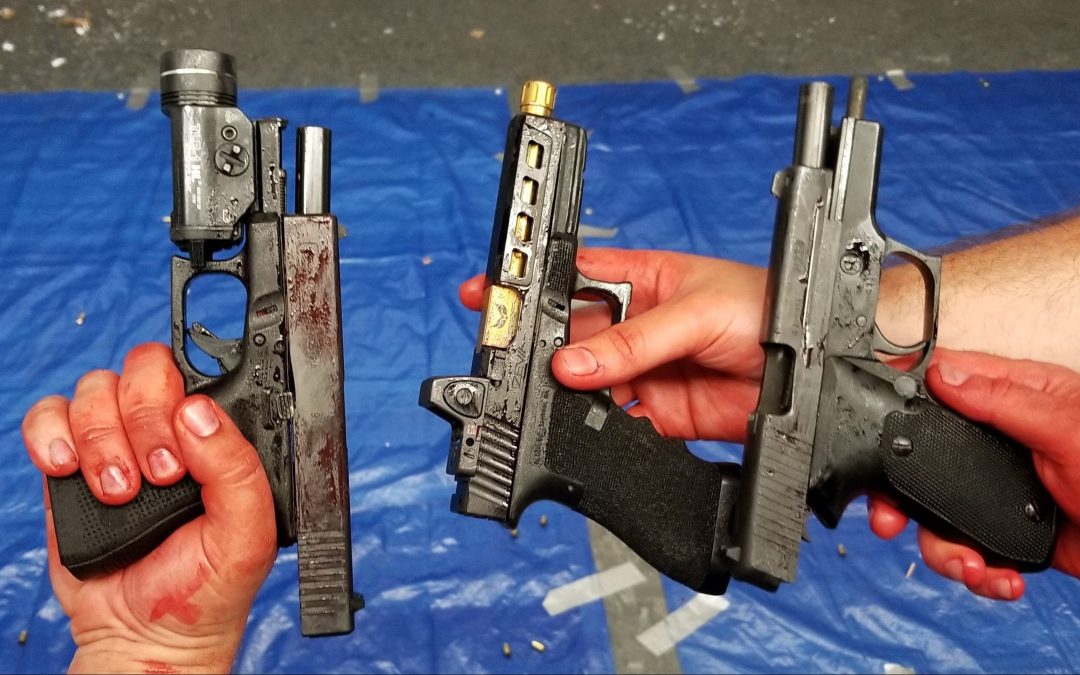
We then moved on to shooting individually with simulated injuries (tennis balls and duct tape). Erik used a spray bottle with stage blood to simulate bleeding, which really drove home the important of staying focused despite distractions as well as having aggressive grip texture on your firearm. For me personally it also validated that the RMR will function in adverse conditions as Erik did not hesitate to give my dot several direct “arterial” sprays.
Erik also began using a wooden stick to instigate malfunctions in our firearms so that we were able to practice getting them back into the fight while injured.
Finally, using Triumph Systems pivoting targets, we individually ran a threat engagement drill where we stopped a threat and then treated an injury behind cover under the timer. This was great to combine all the components we had practiced while also reinforcing the important of maintaining awareness because threats may reappear and are always the first priority.
Summary
Overall I thought Erik did an excellent job teaching us valuable, life-saving knowledge and skills in a fun/engaging manner. We also got to see how our various gear choices held up under hard use and in compromising circumstances. I left with medical knowledge I didn’t have as well as some identified weaknesses like support hand only shooting, but also confidence in my abilities and gear choices.
by etweedt99 | Mar 13, 2018 | Uncategorized
What did your concealed carry class teach you? Whatever a bureaucrat, that probably doesn’t even own a gun, felt was necessary. Concealed carry courses generally cater to the new shooter and are meant, only, to fulfil a legal requirement. It is a licensing class, not a gun fighting class. In Illinois all that is required to teach concealed carry is that you have a CCW permit and NRA basic pistol. Neither of which teach you how to fight with your gun. Concealed carry class teaches you the legal requirements. The NRA basic pistol focuses on basic marksmanship and safety. Safety rules that don’t pertain to self-defense…. why are there 2 sets of firearms safety rules???
For most people this will be the only formal firearms education they receive. This is unacceptable in my mind, but as my wife is quick to point out “They aren’t you.” Maybe this is a failing on the instructor for not stressing enough that the concealed carry class is only the beginning and you need to seek out specialized education designed around fighting with your gun. Maybe this is the student suffering from the Dunning-Kruger effect. It doesn’t matter, this is why I stress the essential skills required for a gun fight in my entry level course, and all of my other courses are designed around those essential skills. There is no such thing as advanced skills. There is only the mastery of the essential skills performed at a more demanding level.
What do I feel should be taught in an entry level course that may very well be the only course some students ever take? It is my responsibility, as an educator, to give you best possible chances of winning a gunfight/ deadly force encounter that I can. I have to give you the essential skills that you need to win. Winning is the only option. These skills are different from basic gun handling. Now, anytime your gun comes out there is always a chance of death, the bad guys or yours. So, I need to enable you to place accurate and effective hits on target. That cannot occur when you only shoot the qualification. That is the major problem with concealed carry classes. These essential skills must be performed on demand.
I had a student recently for a private session that kept asking questions that should have been covered during the concealed carry course. Is it possible this student zoned out or forgot? Maybe, but this student was a sponge soaking up every word I said and was eager to learn; so, I doubt it. Clearly the instructor had failed this student. This, again, is unacceptable yet it happens on a constant basis. Though I can’t complain, a large deal of my business is correcting other instructors’ failings. When I was working as a gun bunny, I had a customer approach me and present their brand new CCW permit very proudly. After a short discussion I showed him the gun of his choice, which he promptly picked up, pointed at my head and yanked that trigger like he was pulling a kid out of shark infested water. After some harsh words on firearm safety and completely ignoring his lack of appropriate gun handling, he and his family became regular clients for private classes.
Most classes, unfortunately, just have you shoot the state required qualification. This does nothing to prepare you to defend your life. If the only shooting you do is a warm up and your qualification you probably shouldn’t give that person your money, they are stealing from you. You should be spending a significant amount of time on the range, how to work the trigger, how and when to use your sights, working from concealment (eventually), working malfunctions, reloading on a proactive and emergent basis (yes, I know that reloads are statistically unlikely, the skill is still necessary), …. LEARNING HOW TO FIGHT WITH YOUR GUN!!! A quick way to tell is to look at the round count. If the qualification is only 30rds and they tell you to bring 50rds…. that’s a clue. Look for classes that have you shooting a minimum of 300rds. Yes, I can show you what to do with 50rds, but the chances of you actually retaining it are slim. You have barely begun the process of learning that new skill.
Vet your instructor. I see so many instructors teaching shit they have no business teaching or taking shortcuts. There is no online portion to IL concealed carry. Neither concealed carry nor NRA basic pistol teach tactics, so why do some these “instructors” teach low light, barricade shooting and movement skills? This doesn’t pertain to Law enforcement or Military instructors. But the rest of them that have never taken anything beyond those 2 classes are just mimicking, poorly, what they have seen on social media. Yes, unfortunately, the social media school of gun fighting exist. No, you should not attend.
My intent is not to bash other instructors. But, when was your instructors last class as a student? Instructors that stagnate are the equivalent of students that take their concealed carry course and never touch their gun again. If you instructor isn’t challenging themselves (through course work, competition, or their peers) to grow and better themselves, how can they do that for you. If they aren’t committed to the learning process how can they grow and remain relevant. If your instructor only has the bare minimum requirements, how will they be able to provide quality education of the essential skills required to win a fight for your life.
Should you take a class taught by a Law enforcement or military instructor? Sure, you should take as many classes as possible. Those guys are a wealth of knowledge, but you need to know how to filter that information prior to attending class. Does what they are teaching pertain to you, your life style and your mission? Leo and Mil have a different mission than an armed citizen. Rarely do either of them function without back up a radio call away. Neither of them must conceal their firearm. Both can carry long guns openly. Both are hunters, have legal teams worth millions, and have different rules of engagement then the armed citizen. Both can teach you a great deal but, can you differentiate the roles? Why does an armed citizen need to be taught military or law enforcement tactics during, possibly, the only formal class they will ever attend? What if you took a class from someone that functions daily the same way you do? What if your teacher had to follow the same rules they are teaching? What if your teacher lived their daily life in a way that paralleled yours? Someone that has to conceal, has no back up, will be placed in handcuffs and possibly taken to jail immediately after using their firearm. Someone that has dedicated themselves to same methods they are preaching. Someone that must not only conceal their firearm but, their abilities, their intentions, and project an image that doesn’t differ from those around them in their daily lives. The same this goes for competition shooters. I bet I could learn a lot from a Grandmaster ranked competitor on being a better shooter, but what can he teach me about concealed carry. What I need to teach you isn’t cool or flashy; my job is to educate you enough to understand and make use of the essential skills required to win. I said educate, not train, why? You educate people, you train animals.
A good instructor gives credit where credit is due. There is nothing new in this game, 99.9% of it has been done before, forgotten, and relearned. Sure, each instructor has their own take on skills and how to perform them, but we all teach basically the same thing. No, I don’t mean only take from 1 instructor or there is only 1 way of doing things. What I mean is, if an instructor is advertising something that no one else in the industry is doing or is so “innovative” that nobody is mimicking or stealing it…. it’s almost always garbage. They are just trying to make themselves look good, all flash and no substance. So, do a little research and ask some questions before you give your money and time to someone that is supposed to be teaching your how to save your own life. I don’t remember where I heard it or the exact words, but the gist is…” there are two things you shouldn’t cheap out on, surgeons and things designed to save your life.”
This is why you don’t see me offering a concealed carry class. Instead, my Handgun Essentials 1 course teaches you the skills you will need in gun fight. Additionally, it qualifies as an Illinois Concealed Carry course. Don’t worry, if you ever need these skills, you will have the rest of your life to figure it out.
